On 30 October 2026, the Food and Agriculture Organization said it was seeking US$10 million in Mozambique ahead of the 2026/27 agricultural season to expand support for vulnerable farming families before expected drought impacts. That makes this more than another broad El Niño warning. It is a concrete country-level appeal that can be checked against real follow-through: whether money is pledged, transferred and turned into visible pre-crisis action before the season moves on. FAO Mozambique appeal
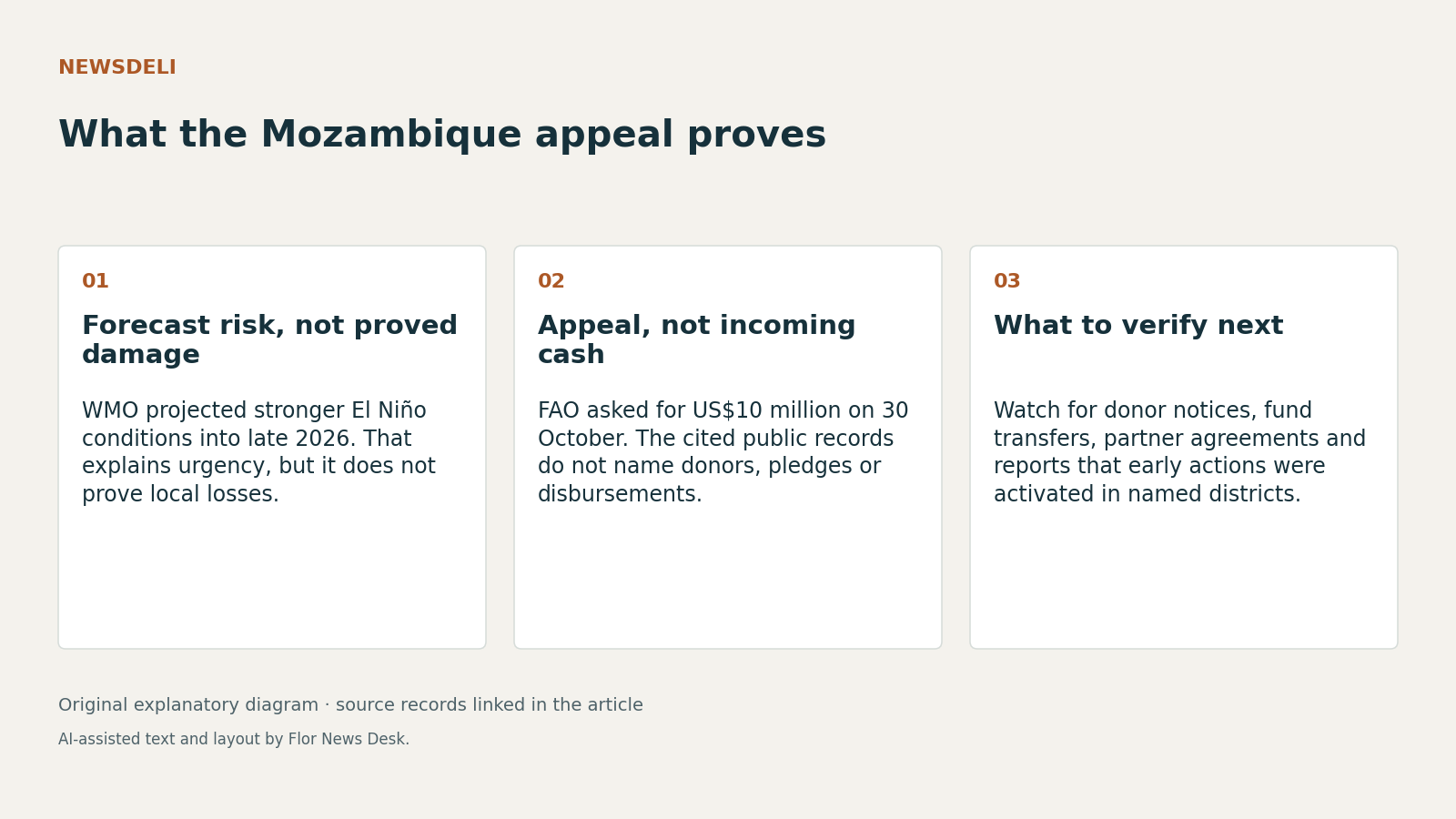
The climate case for urgency is clear, but it is still a forecast case. In its 8 October update, the World Meteorological Organization said models pointed to further intensification, with the seasonal average Niño 3.4 anomaly around +3.7°C for October to December 2026 and warming expected to peak around December 2026. An undated UN El Niño focus page, which includes a 21 October statement from WMO Secretary-General Celeste Saulo, likewise presented the event as potentially unprecedented in strength and repeated a strengthening outlook for November 2026 to January 2027. Those records explain why agencies are moving early. They do not establish what has already happened in Mozambican fields or households by 7 November 2026. WMO seasonal update UN El Niño page
The June 2026 FAO-WFP joint appeal helps explain the policy idea behind the Mozambique request. WFP and FAO describe anticipatory action as financing measures before forecast shocks happen, not waiting for a later emergency response. The joint appeal says proposed tools can include cash assistance, drought-tolerant or flood-resistant seeds, livestock protection, water harvesting and storage, flood protection works, agricultural advisories and early warning information. In other words, the promise is not simply faster aid; it is aid timed to protect assets and production before losses deepen. FAO-WFP joint appeal
Mozambique is where that abstract model becomes testable. FAO says the October-to-March lean season was already under way when it published the appeal, that the Government of Mozambique had activated its Anticipatory Action Framework, and that thresholds for early action had been reached in 39 districts, citing the joint appeal. FAO also says it had already begun helping more than 150,000 people with drought-tolerant inputs and livestock vaccination measures ahead of planting. Those are meaningful institutional claims, but the cited record still does not name the 39 districts, identify partner contracts or provide measured outcome data. FAO Mozambique appeal
That missing detail matters because an appeal is not the same thing as funded implementation. FAO says its Mozambique request sits alongside a call in which WFP requires US$20 million for early-warning information and cash-based assistance, but the public records cited here do not identify donors, confirmed pledges, disbursement notices or money received for the Mozambique package. The WFP appeal page also does not provide a country-by-country financing table in the retrieved summary. As of 7 November 2026, readers can verify the request and the intended use, not the arrival of funds or the scale of delivery that may follow. FAO Mozambique appeal FAO-WFP joint appeal
The practical accountability test is therefore narrow and time-sensitive. Because the WMO outlook is prospective and the lean season is already under way, the first useful milestones are not new warnings. They are documentary signs that the warning changed operations: donor pledges, fund transfers, implementing agreements, named activations in specific districts and later reports showing what was delivered before impacts intensified. If those records appear quickly, the Mozambique appeal will look like a real case of forecast-led action. If they do not, the public evidence will still describe mostly intent. WMO seasonal update FAO Mozambique appeal
That is the most useful way to read the announcement. The UN system’s own framing is that early warning, immediate response and anticipatory action should run in parallel, not as substitutes. Mozambique now has a visible anticipatory appeal on the table. What the public record has not yet shown is whether the finance arrives in time to make that distinction real on the ground. UN El Niño page