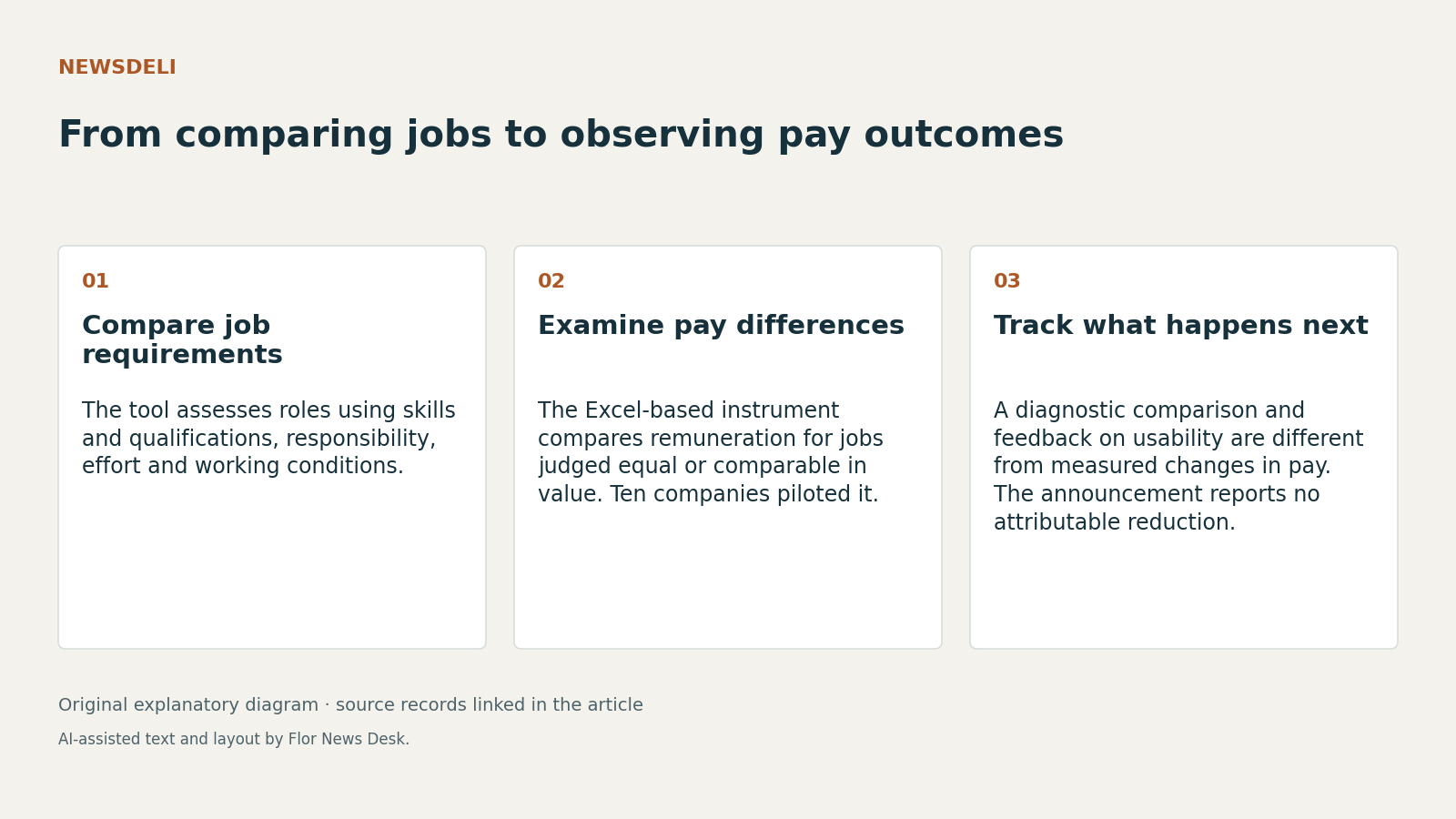
A new pay-evaluation tool in Moldova begins with the work a job requires, then compares how jobs are paid. The International Labour Organization described the Excel-based instrument in a September 17 announcement. Its purpose is to help employers identify pay differences that may not be justified when jobs have equal or comparable value.
The ILO says ten companies piloted the tool. Adapting it for businesses with fewer than 50 employees and developing a web application are planned next steps, rather than completed features. That distinction matters to anyone reading the announcement as evidence of a finished nationwide rollout.
The assessment uses skills and qualifications, responsibility, effort and working conditions. It evaluates the job separately from the personal characteristics of whoever holds it. The practical question is therefore broader than whether two people with identical job titles receive the same amount. A title does not describe everything a role demands, and different titles do not, by themselves, settle whether the work is comparable.
Consider a hypothetical employer comparing two roles. One involves handling complex customer problems; another involves coordinating supplies and schedules. Their titles alone would provide little basis for judging their relative demands. A meaningful comparison would need to examine the actual requirements consistently. This example does not assign either role a score or claim that the Moldovan pilot included those positions. It illustrates why the choice of comparison comes before interpreting a pay difference.
In its separate September 18 Equal Pay Day statement, the ILO called for action through pay transparency, wage-setting institutions and dialogue involving employers and workers. Its emphasis on the value of work places the new tool within a wider discussion about how jobs are evaluated, rather than treating a spreadsheet as the entire response to pay inequality.
The surrounding programme is broader still. The ILO’s Moldova project page describes work with UN Women covering July 2024 to June 2028. Alongside pay inequality, its stated aims include addressing childcare barriers, gender stereotypes and women’s opportunities to participate in the labour market. These are programme objectives, not evidence that the new instrument has already changed employment or earnings.
That wider scope helps separate two questions. Comparing remuneration within an enterprise concerns people and jobs already represented in its records. Understanding who cannot enter paid work, or who lacks access to particular opportunities, requires a different inquiry. An internal comparison could be useful without answering every question about inequality outside the workplace. Combining those questions into one score would conceal the differences between them.
The pilot announcement also leaves an important outcome question open. Feedback on whether a tool is usable is different from evidence that employers subsequently changed pay and maintained those changes. The cited records do not provide a measured pay-gap reduction attributable to this instrument.
The immediate development is a way to organise a comparison, with further adaptations planned. Its longer-term significance will depend on what follows the diagnosis: the decisions made, the changes documented and the results observed.